The meeting is booked. The client is abroad, the call will be in English, and that knot shows up in your stomach: “what if I freeze right when it matters?”
Here’s the good news: you don’t need perfect English to close the deal. You need to run the conversation with clarity and not let the language steal your credibility. These five tactics help — and the last one makes sure that even if you freeze, the conversation doesn’t.
1. Prepare the essentials (don’t memorize a script)
Memorizing a full script backfires: the first off-script question and you’re lost. Prepare three things instead:
- Your business vocabulary in English (the 10–15 terms you use all the time).
- Three anchor phrases to open, ask for clarification, and close.
- The numbers and dates that will come up (price, timeline, scope) — write them down so you don’t fumble.
Prepare the essentials and you’ll have solid ground to improvise the rest.
2. Open the call by taking control
Whoever opens with confidence sets the tone. Start simple and direct:
“Thanks for making the time. I’d like to start with your goals, then walk you through how we can help. Sound good?”
And drop the embarrassment about asking someone to repeat themselves. Asking for clarity is a sign of professionalism, not weakness:
“Could you rephrase that? I want to make sure I get it right.”
3. Slow down and confirm understanding
Under pressure we speed up — and that’s exactly when English falls apart. Do the opposite: speak slower than feels natural. It buys you thinking time and the other side follows more easily.
After each important point, confirm out loud:
“So just to confirm: delivery in four weeks, two rounds of revisions. Right?”
Confirming numbers and timelines out loud kills the misunderstandings that get expensive later.
4. Keep a real-time safety net
Even well prepared, there will be a moment when the word just won’t come — and the more it matters, the more it hides. Instead of hoping it won’t happen, have a plan B.
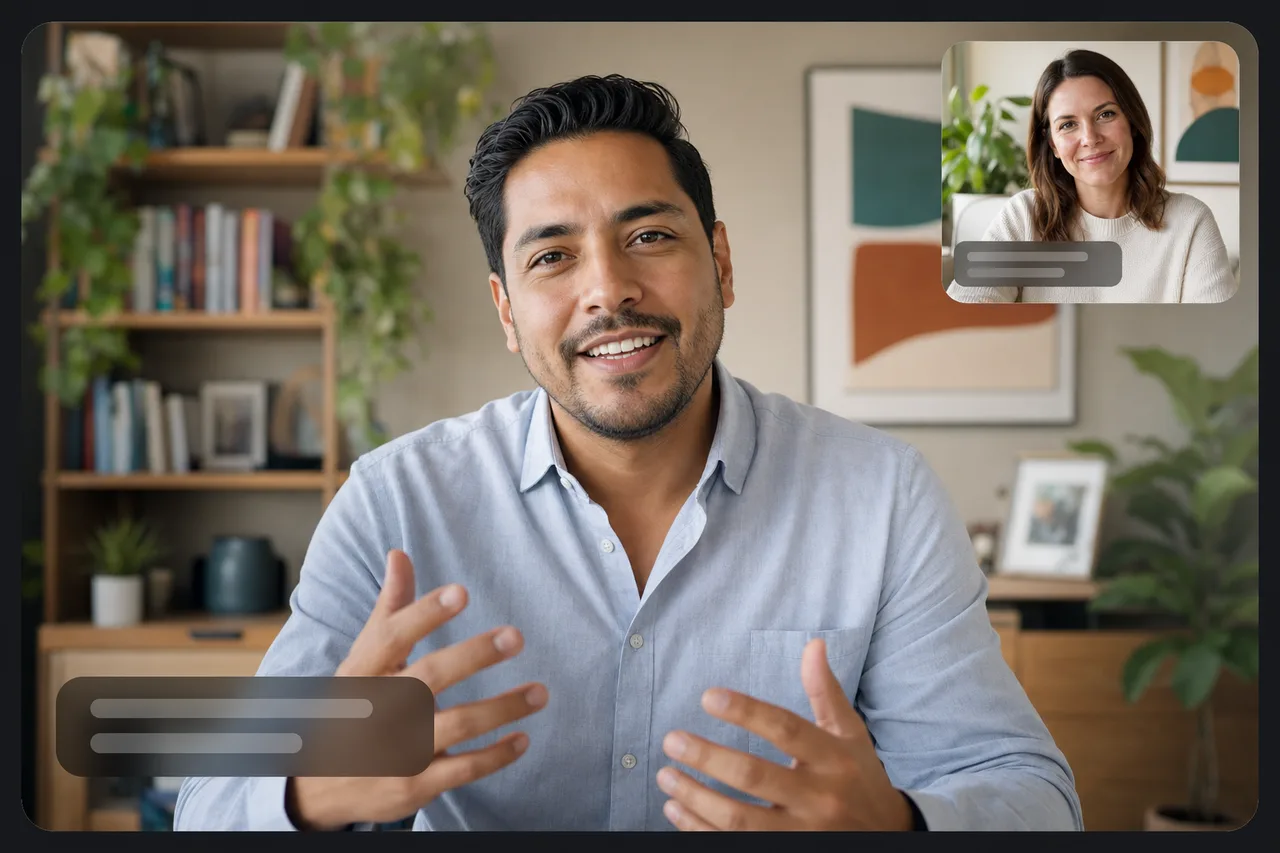
That’s exactly what Talkniva is for: you speak Portuguese, your client hears English, live, with captions on both sides. Just share a link — your client joins with nothing to install. When you freeze, you speak in your own language and the conversation keeps moving, without the awkward silence that cools a deal.
Think of it as the interpreter you only call on when you need it — no scheduling. If you want to see how it works, read about having a conversation with a real-time conversation translator.
5. Close with a written recap
At the end of the call, send a short written recap: what you agreed on, next steps, timelines. This:
- fixes any detail lost in translation;
- shows you’re organized (and makes up for any hesitant English);
- puts what matters on the record.
Frequently asked questions
Do I need perfect English for a business call? No. You need clarity, control, and a way to confirm important details. Prepare the key words, slow down, repeat numbers and dates, and use a real-time translation safety net when the language gap starts to slow the call.
What should I prepare before an English sales call? Prepare your core business vocabulary, three anchor phrases for opening and clarifying, and the numbers or dates that will come up. Do not memorize a full script, because live calls rarely follow it.
What can I do if I freeze during an English call? Pause, ask the other person to rephrase, and switch to the clearest language available. With Talkniva, you can speak in your native language and the other person hears the translation live, with captions on both sides.
Can Talkniva help with a live English call? Yes. Talkniva is built for live 1:1 business calls: you speak and listen in your native language, the other person hears theirs, and both sides get captions to confirm details.
Conclusion
Perfect English doesn’t close deals — clarity and confidence do. Prepare the essentials, run the call slowly, confirm understanding, keep a safety net for when you freeze, and close in writing. Do that and the language barrier stops being the reason you lose a client.
Want to walk into your next call without the fear of freezing? Create a Talkniva room and speak your own way — we translate, live. No subscription — you pay only for the minutes you use.